9 min read

🔶 News Alchemists #68: Your impact questions answered

And: innovative Latin American newsrooms I met in Rio.

Hello, and welcome back to the News Alchemists newsletter!

And a first welcome to new subscribers from Rádio Novelo, Northwestern University, the International Press Institute (IPI), Porvir, Internews, and all of you brave souls working independently.

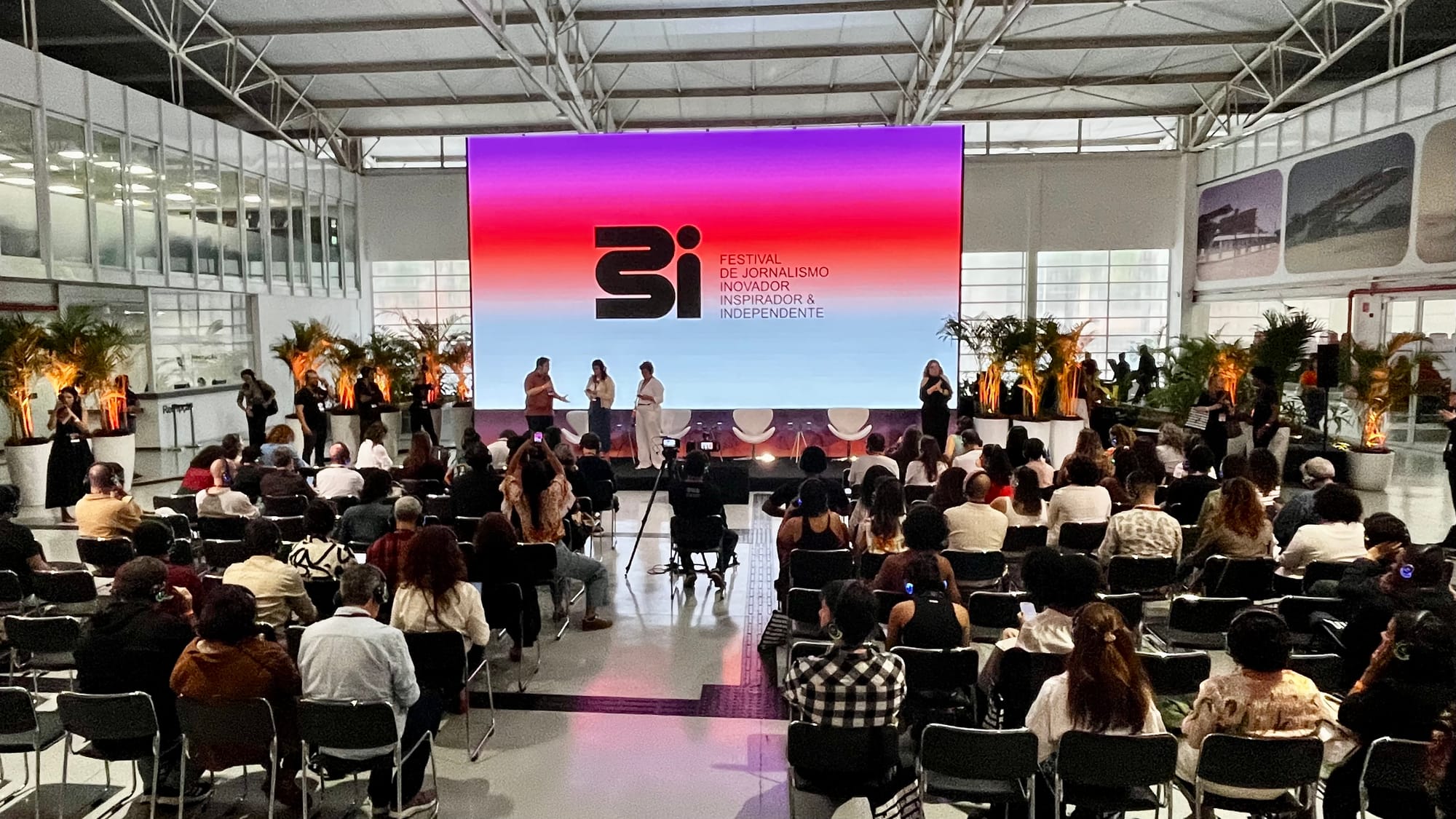
I'm just back from my first visit to Rio de Janeiro, where I attended the 3i Festival organised by Ajor, the Brazilian association of digital journalism.

(If you're wondering, the three 'i's are: innovative, inspiring, and independent.)
The calm before the storm at Maravalley.

The programme was dense: 10 panels, 20 workshops, 4 interviews, 1 hackathon, and at least a dozen other sessions over three days.

I learned about innovative projects and met inspiring people from the Brazilian and Latin American independent journalism scene. Today's newsletter is about them.

But that's not it. This email also includes:

  1. The announcement of a meet-up I'm co-hosting on 1 July with the Impact Network – and that I hope you'll want to join;
  2. And the usual LinkedIn Corner, which I hijacked to share something I posted last week that got more comments than anything else I posted on LinkedIn over the last two years. If the post had a title, it would be: Anything but Substack.

One last thing before we dive in: a big Thank You 🫶 to the five beautiful souls who made a donation to help me cover the growing costs of running this newsletter – which increased by quite a bit now that we are over 1,000, as I explained last week.

Their donations already covered 55% of the additional costs. If you want to help get that number closer to 100%, you can do it here. Thank you.

Ok, let's go. 📚
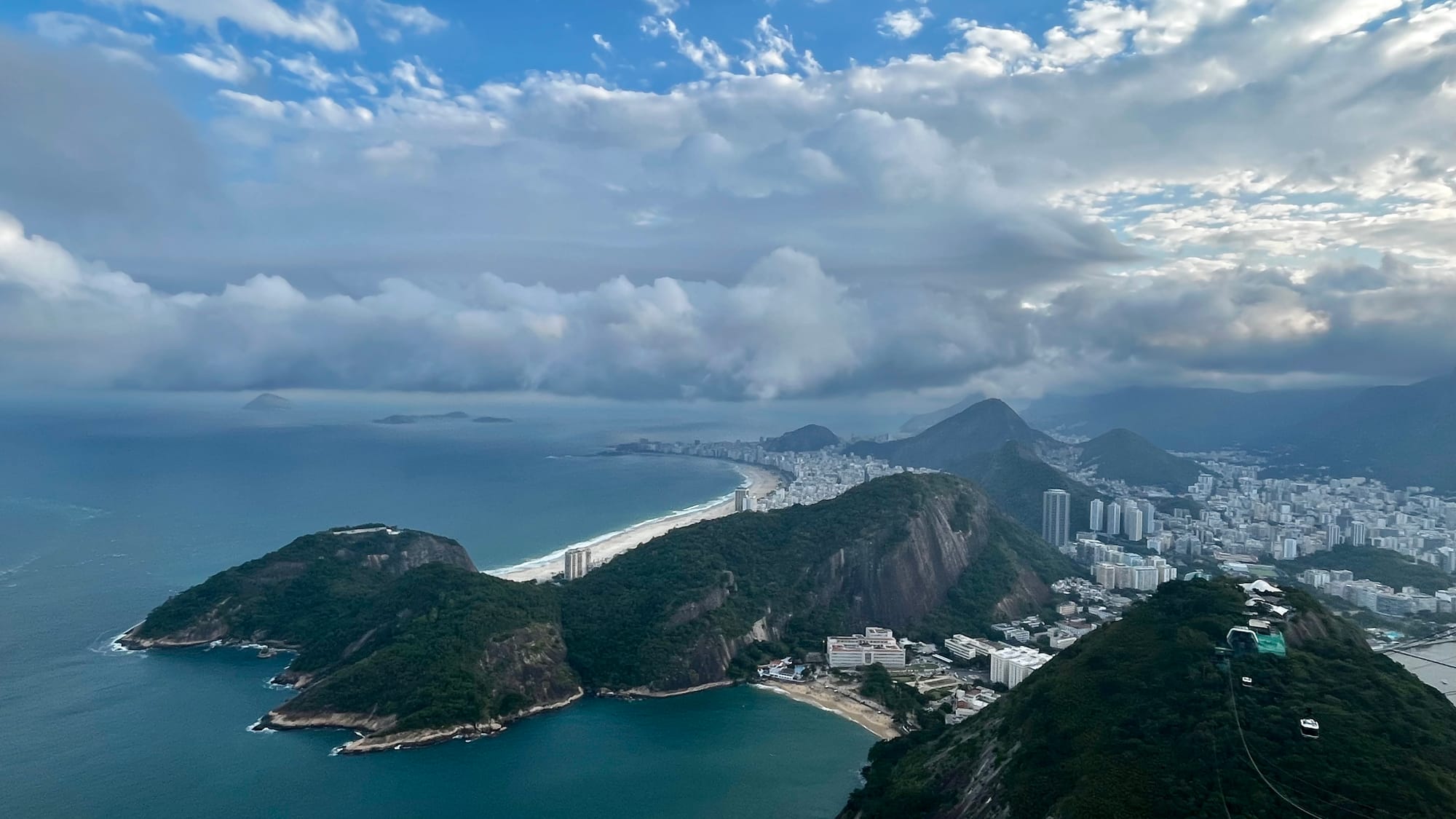
Rio. What a city. And I was lucky enough to have a newsletter reader as my personal guide one evening. Thanks for the tour, Juliana!

P.S.: Your usual reminder that you can shape the direction of this newsletter with a single click: scroll to the end and give me a thumbs-up or thumbs-down if you liked this edition (or not) – or add a comment to share your thoughts.

Of course, this is an email, so you can always just click 'Reply'. I love it when you do it.

Brazilian and Latin American independent newsrooms with interesting stories to share

If the 3i Festival was on Netflix, these panels would have been four episodes of the same show:

  1. What if impact was the starting point of what we publish?
  2. Creativity, emotions, and art in audience engagement
  3. Present and future of journalism's financial sustainability
  4. Focus on the audience: connection, relationships and strategies

I was on the last one, but I would have happily participated in all four of them – and I learned a lot from all of them. Impact, engagement, and sustainability are tightly connected, with the first two as necessary tools of any strategy aimed at helping an organisation find some level of financial sustainability. Tying everything together is the audience and the relationship we build with them – a mostly-broken relationship that urgently needs to be healed.

(There was no panel specifically about product, but that would have been Episode 5 of the Netflix show.)

The impact panel featured two organisations you've read about multiple times in this newsletter, because of how much I admire them (so much that they are a stable presence in the workshops I give about people-centred journalism): 🧩 El Surti from Paraguay and 🧩 Mutante from Colombia.

They talked about measuring impact as “significant participation”, something that really stuck with me. 🧞Elizabeth Otálvaro, Mutante's co- executive director, also explained very clearly why a focus on impact still feels like a rather novel concept in our industry: "We obsess about the content we produce, but not about its consequences."

The impact panel in progress.

The panel about audience engagement discussed how artistic languages and shared emotions can strengthen the bond between journalism and the public.

It started with 🧞Sanara Santos, co-founder of 🧩 Énois – a communication lab that supports emerging initiatives in low-income areas of Brazil to strengthen well-being through community information – saying something you might have heard before in these emails: "I don't like to use the word 'audience'. It makes us forget that we are talking about people like us."

Also on the panel, 🧞Pablito Aguiar – reporter / comic book artist at 🧩 Sumaúma, which I featured in #52 – expressed the hope that every newsroom could have a cartoonist on staff, believing that comics can be a powerful medium to tell profound stories in an accessible way.

The moderator was 🧞Marília Moreira, director of 🧩 Instituto AzMina, a feminist nonprofit organisation from São Paulo that uses communication, technology, and education to fight for women's rights.

Moderating the panel on financial sustainability was 🧞Vitória Régia da Silva, executive director of 🧩 Gênero e Número, an organisation that works at the intersection of data journalism, research, and advocacy to address the lack of data on inequalities that cut across gender, race, and rights in Brazil and Latin America.

(AzMina and Gênero e Número are featured in this piece that presents two AI-powered tools they have built to monitor online hate speech and gender misinformation.)

It was very encouraging that a panel on financial sustainability opened with numerous references to the need for journalism to "create real value for people by understanding and meeting their needs" – along with calls to "constantly rethink the value of journalism".

A great success story on the panel was 🧩 GK Ecuador – represented by CEO 🧞José María León – a media organisation with a slogan that summarises very well the panel itself: "Periodismo que importa sobre lo que te importa". ("Journalism that matters, on what matters to you".)

And last but not least, the audience panel I was invited to join, wonderfully moderated by 🧞Cíntia Gomes, institutional director of 🧩 Agência Mural de Jornalismo das Periferias, a digital media outlet focused on local journalism and reducing information inequality in (and about) the low-income areas of São Paulo.

Also on the panel with me:

  • 🧞Rodrigo Ortega – audience editor at g1, one of the biggest news portals of Brazil – who shared interesting examples of how a big organisation like g1 listens to its audience through a savvy use of data, analytics, and AI.
  • And 🧞Juliana Lourenço, journalist and member of 🧩 Abrinjor – a network of journalists from indigenous communities across Brazil – who produced a guide for media professionals on how to report on the stories of indigenous peoples responsibly, ethically, and respectfully.
Right to left: Cíntia Gomes, Juliana Lourenço, Rodrigo Ortega, and myself.

Other interesting Brazilian organisations I encountered at Festival 3i, but not in the four episodes of the Netflix show, include:

  • Investigative outlet 🧩 Agência Pública;
  • 🧩 Amazônia Vox, a platform that amplifies voices from the Amazon and generates opportunities for reporters in the region, founded by my fellow-ICFJ-Fellow 🧞Daniel Nardin;
  • And 🧩 Aos Fatos, Brazil's main fact-checking organisation.

I've focused this round-up on the Brazilian and Latin American newsrooms I wanted to highlight, but the panels featured excellent international speakers as well, including 🧞Daisy Okoti and 🧞Madison Karas among others.

* With big thanks to the LatAm Journalism Review for providing many of the links I used in this section.


Join 'Your impact questions answered: A roundtable.'

'Impact' is both a trendy buzzword and journalism's holy grail, but also a loaded concept that few know how to even define. That's why I'm excited to partner with the Impact Network on their upcoming meet-up: Your impact questions answered: A roundtable.

📆 Online on July 1st at 3pm UK-time.

The Impact Network is a global community of media professionals led by Miriam Wells, impact and strategy editor at The Examination, and Grace Murray, senior impact producer at The Bureau of Investigative Journalism.

This won't be just another panel, but an open conversation centred on your questions about impact – from how to create an impact-first culture in your newsroom, to the endless pursuit of effective ways to measure the impact you produce.

Miriam and Grace will be joined on the roundtable by Jazmín Acuña (co-founder of El Surti and author of Change-centric Journalism), Alessia Cerantola (strategic projects editor at OCCRP), and Eliz Mizon (communications manager at Arena for Journalism in Europe) who will facilitate the conversation.

This roundtable has been months in the making, since Eliz and Miriam answered my call to 'recycle' great proposals that were not selected for the International Journalism Festival in Perugia.

I'm excited that this is finally happening now because it is an example of the evolution of News Alchemists that I teased last week:

Not just a newsletter, but a hub for conversations, exchange of experiences, and even collaboration among media professionals from all across the world who, like real alchemists, believe that together we can turn our journalism into something better: more useful, meaningful and impactful.


⇲ The LinkedIn Corner

A section of this email in which I highlight LinkedIn posts written by newsletter readers that, for different reasons, may not make it to the main section, but are still interesting to share. This week...

I'm taking over this space to highlight a LinkedIn post of my own that might spark some debate. If you're thinking of starting a newsletter and wondering what platform to use, read this:

I keep seeing posts from people who want to start a newsletter and are asking their network here on LinkedIn, often with a poll, if they should do it on Substack, Beehiiv, Ghost, or somewhere… | Mattia Peretti | 28 comments
I keep seeing posts from people who want to start a newsletter and are asking their network here on LinkedIn, often with a poll, if they should do it on Substack, Beehiiv, Ghost, or somewhere else. I’m going to save you some time: the answer you’re gonna get most often is Substack. Not because it’s the better option though. It’s because it’s the most known and most used option. You’re not gathering actual insights from that poll. What you’re measuring is usage and name recognition. And you know what? The comment I started copy-pasting under all these posts is simply: *Anything but Substack.* Why? 1. How Substack steals your audience and your revenue (HT Lex Roman) https://lnkd.in/eBSJhJkJ 2. We’ve been thinking about Substack all wrong (HT Isabelle Roughol) https://lnkd.in/ei3jy-4G 3. How Substack makes money from hosting Nazi newsletters (The Guardian) https://lnkd.in/evZBgzAt If someone is already on Substack, I totally understand that it might be hard to move away from it. But if you’re starting out right now, why in the world would you want your brand to be associated with this platform and the people behind it? Make the right choice. Anything but Substack. | 28 comments on LinkedIn

Documented's strategies to bring the idea of "listening to your audience" to the next level:

Building trust begins by listening — But it only grows when newsrooms give back
Closing the loop with the communities we serve reminds people that their voices matter—and that through collaboration, real progress and change actually happen.

⚙️ Looking for help with newsletter strategy, audience research, or project management? Let's work together.

🌱 Need help growing your media product? I can be your coach.

🤗 Enjoy this newsletter? Forward it to someone you think might like it too.