

🔶 News Alchemists #60: This is a newsletter about money.
Hello, and welcome back to the News Alchemists newsletter!
And a first welcome to new subscribers from The Bureau of Investigative Journalism, Le Temps, Newspack, Main Post, pd digital, Mecseki Müzli, the Reuters Institute, Boston University, SteelWatch, and all of you brave souls working independently.
This is a newsletter about people-centric journalism. My stated goal is to "give you hope about reimagining journalism and its role in society".
But it's also a newsletter about money.
When I created News Alchemists – the movement that preceded the newsletter – I made it a point to present a theory built on the interconnection between people-centricity and financial sustainability.
To anyone who'd care to listen, I'd show a Venn diagram that made the obvious visible: we must focus exclusively on products and experiences that create value for people and make us money as a result.
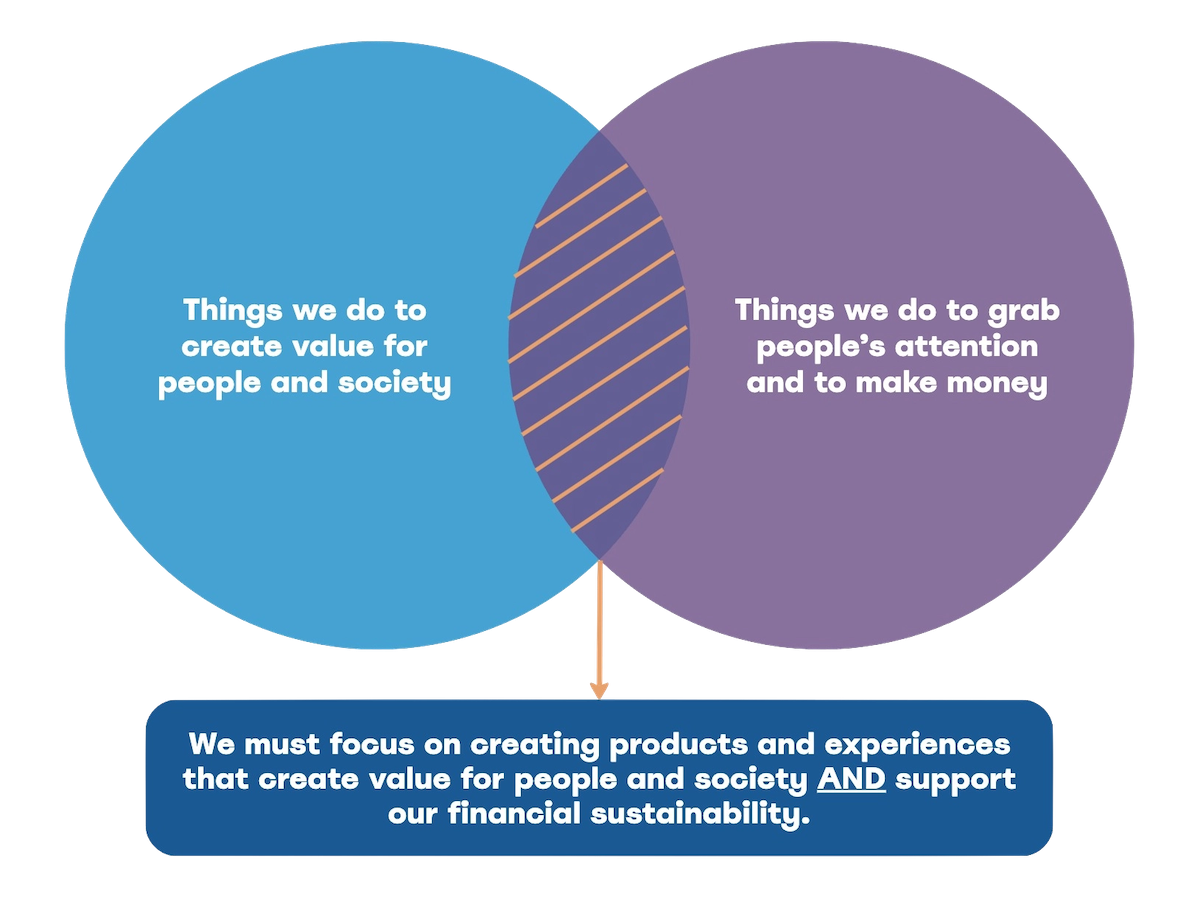
Now that I'm transitioning from being "a consultant with a newsletter" to building a one-man business that serves the needs of its audience in multiple ways, I'm experiencing first-hand how hard it is to stay focused on the intersection of that Venn diagram, and how hard it is to... wait for it... make money.
So I dug into my burgeoning list of links that I want to share with you, and selected seven that focus on the messy, complex, often-frustrating but oddly enjoyable struggle of making money through journalism that makes a difference in people's lives.
Enjoy the links 📚 And see you next week at Scrooge McDuck's Money Bin!

1. Guide to audience revenue and engagement 👉 LINK
This guide was put together in 2018 by 🧞Emily Goligoski and 🧞Elizabeth Hansen for the Tow Center for Digital Journalism. It's a gold mine. (Pun intended.) It systematised lots of the complexity around audience revenue with clear definitions and strategic tips.
"No matter which issue(s) your site covers, its size, or its legacy with supporters, we hope you’ll bring curiosity about prospective visitors’ needs when crafting editorial products and designing revenue streams. A spirit of experimentation aids this important work."
2. Basta! – a French investigative media outlet that relies solely on donations 👉 LINK
The guide above clearly outlines three different audience revenue models: subscription, membership, and donations. 🧩 Basta! chose the latter, and it paid off: over 6,000 people donate an amount of their choice every year, for a total of 400k euros in 2025. This is how they do it.
3. The untapped potential in local U.S. newspapers’ appeals for financial support 👉 LINK
A core part of getting any revenue from your audience is... asking them to give you money. This academic paper analysed how local newspapers across the U.S. appeal to their readers to subscribe or donate, and found that they often "fail to articulate the value of local journalism as a democratically and civically vital institution and [...] do not leverage the empirically validated principles of effective persuasive communication". Sadly, I don't have access to the full paper but the RQ1 newsletter has a quick summary of the key insights.
4. I often get told by potential subscribers that we charge too much for a subscription 👉 LINK
This post by 🧞Alastair Otter – founder and editor of 🧩 The Outlier, a South African data-driven media company – has been sitting in my spreadsheet for a while, and I'm happy I didn't share it before because it fits perfectly in this edition. It's a honest and transparent account of the costs involved in running an independent media business, and the difficult considerations that go into deciding how much to charge for a subscription.
5. What we’ve learned about building sustainable revenue for independent news 👉 LINK
News Revenue Hub is a nonprofit organisation that help newsrooms raise money through membership and crowdfunding programmes. In this note, CEO 🧞Mary Walter-Brown shares what the organisation has learned in almost ten years of operation. This point stood out to me:
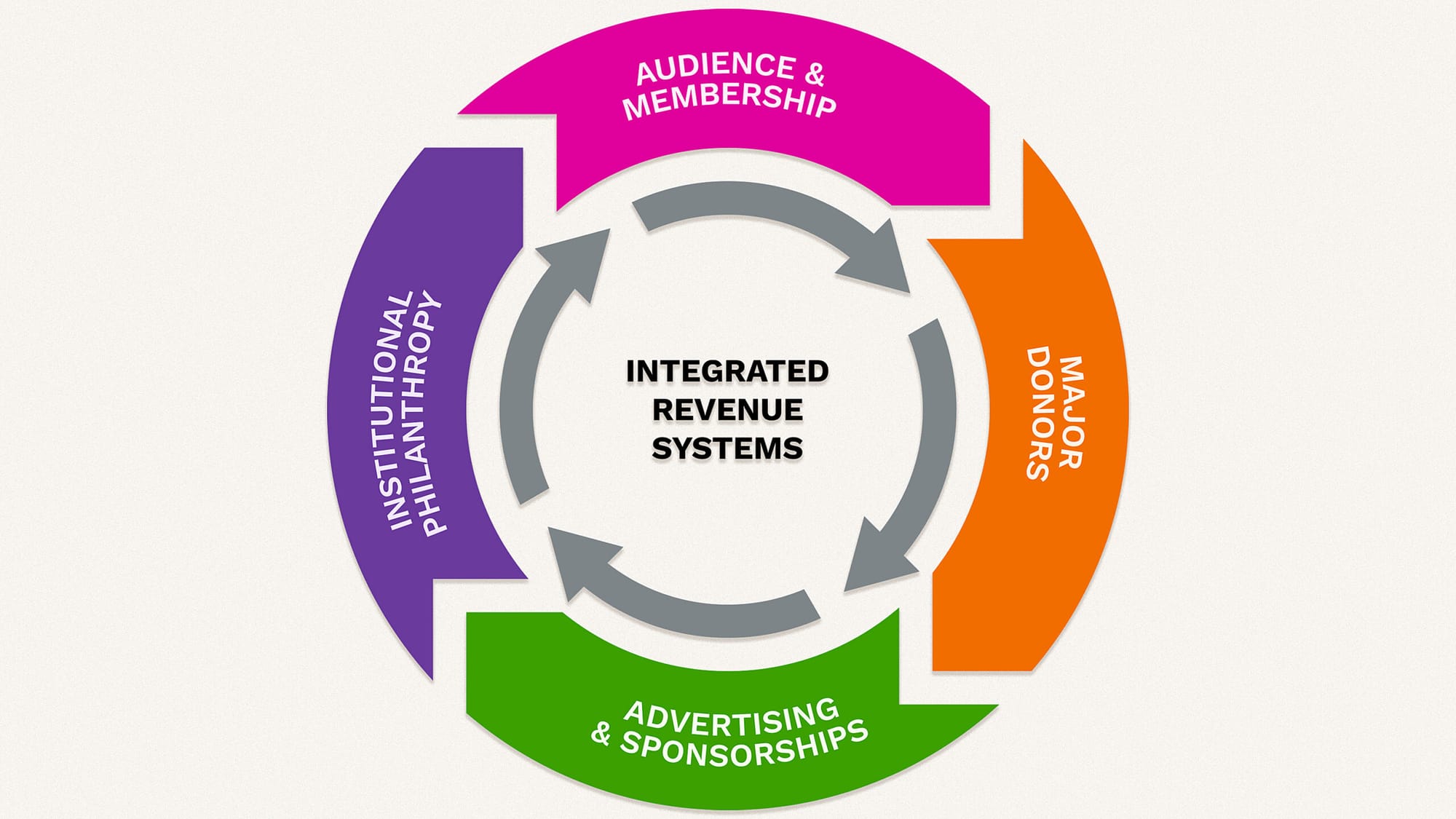
"After working closely with hundreds of newsrooms, we’ve seen that the healthiest news organizations are those building diversified, interconnected revenue systems, where different forms of support reinforce one another. [...] Sustainability doesn’t come from maximizing one revenue stream. It comes from balance."
6. Limited strategic prioritisation, misaligned value propositions are responsible for registration failure 👉 LINK
Subscription is the most widely used audience revenue model. There's a lot of content out there sharing effective strategies to convince people to subscribe. What I like about this piece by 🧞Ben Whitelaw is that it focuses on the key step that sits between anonymous traffic and paid conversion in the audience funnel: registration.
As Ben puts it: "[Registration] allows publishers to identify readers, build first-party data, and increase engagement before introducing subscription offers." But often this step gets overlooked in the rush to get readers to pay for a subscription. Read the piece to find out how you can strengthen your registration strategy.
7. The financials of Il Post 👉 LINK
I'm a sucker for media organisations that share their financial results in a transparent and accessible way – especially if they are reader-funded. 🧩 Il Post (an Italian media outlet I already featured in #13) has been doing it since 2019, the year they launched their membership programme: the same short article every year, with clear data visualisations about both costs and revenue.
❓ Do you know of other organisations that do something similar? Send them my way.
And the most clicked link from the previous edition is... 🥁
 Lamar
Lamar
🌱 Need help growing your media product? Book a free chat and let's talk.
⚙️ Looking for help with newsletter strategy, audience research, or project management? Let's work together.
📢 Wanna promote your products? Sponsor the News Alchemists newsletter.
🤗 Enjoy this newsletter? Forward it to someone you think might like it too.
Member discussion